How Can an Industrial Desiccant Dehumidifier Improve Manufacturing Efficiency?
Humidity control is a critical part of modern industrial operations because excessive moisture can affect product quality, production efficiency, equipment reliability, and storage conditions. Many industries rely on carefully controlled environments to ensure consistent manufacturing processes and compliance with quality standards. Whether producing pharmaceuticals, food products, electronics, lithium batteries, chemicals, automotive components, or precision engineered materials, maintaining the correct humidity level is essential for operational success. Investing in an Industrial Desiccant Dehumidifier provides manufacturers with a dependable solution for controlling moisture under demanding industrial conditions. Unlike conventional humidity control methods, desiccant technology delivers consistent performance across a wide range of operating temperatures while supporting continuous production. Understanding how industrial dehumidification systems function and the benefits they provide allows businesses to make informed decisions that improve productivity, protect equipment, and maintain product quality over the long term.
Why Is Humidity Control Essential in Industrial Facilities?
Moisture affects manufacturing processes in many different ways. High humidity can cause condensation on equipment, corrosion of machinery, microbial growth, product contamination, packaging failures, and deterioration of moisture sensitive materials. These issues may increase production costs while reducing product consistency and operational efficiency.
Industrial environments often process raw materials that react to changes in humidity. Pharmaceutical ingredients, electronic components, food products, powders, chemicals, paper products, textiles, and precision engineered materials require stable environmental conditions to preserve their physical and chemical properties. Proper humidity control helps maintain manufacturing consistency while reducing material waste and quality issues.
Humidity also influences equipment performance. Excess moisture may damage electrical systems, control panels, production equipment, and storage facilities through corrosion or condensation. Maintaining appropriate humidity levels helps extend equipment life while reducing maintenance costs and unexpected production interruptions.
Industries That Depend on Controlled Humidity
Numerous industries require advanced dehumidification systems, including pharmaceutical manufacturing, food processing, clean rooms, electronics assembly, lithium battery production, cold storage, defense manufacturing, automotive production, seed storage, water treatment facilities, plastics processing, and chemical manufacturing. Each industry requires humidity control solutions designed specifically for its production environment.
What Makes Desiccant Dehumidification Different?
Industrial humidity control technologies vary significantly depending on application requirements. Conventional refrigeration based dehumidifiers perform effectively under certain conditions but may become less efficient when lower humidity levels or colder operating temperatures are required. Desiccant technology provides a different approach by removing moisture through highly efficient moisture absorbing materials rather than relying solely on cooling.
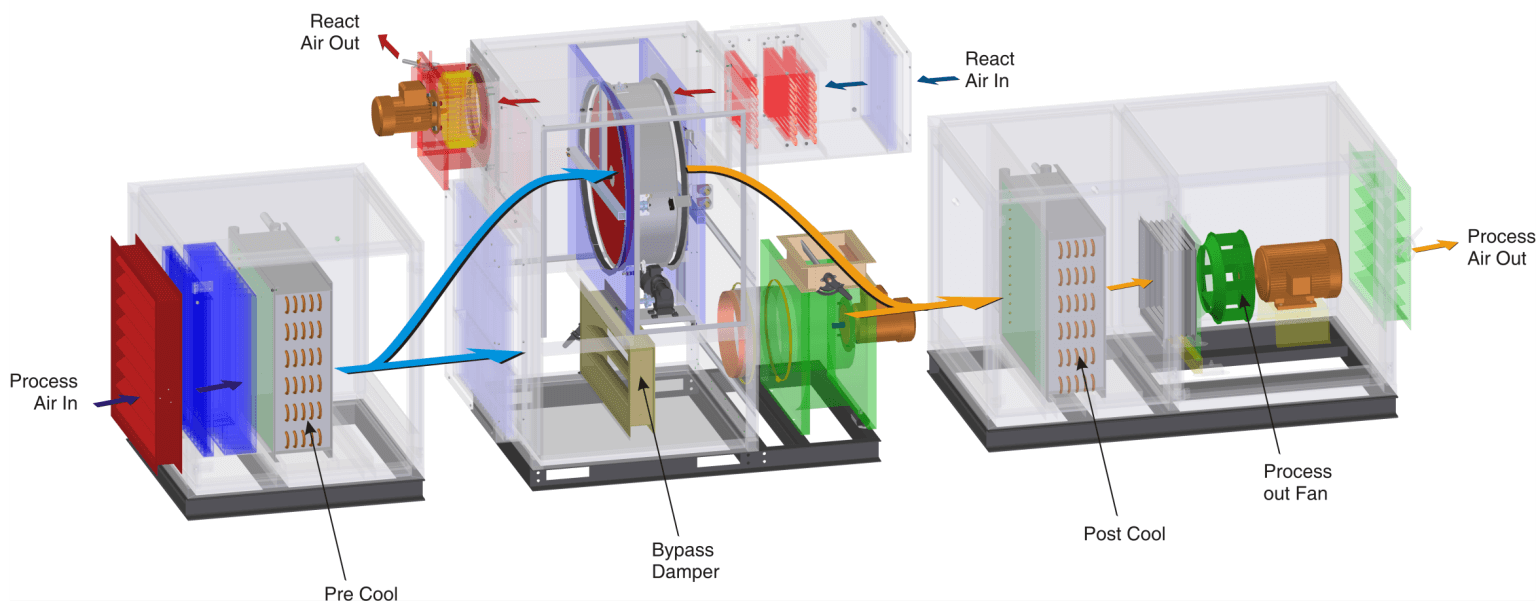
A desiccant dehumidifier continuously absorbs water vapor from the air using specialized desiccant media. The moisture is then removed through a controlled regeneration process, allowing the system to operate continuously while maintaining stable humidity levels. This process enables reliable performance across a wide range of temperatures and environmental conditions.
Another advantage of desiccant systems is their ability to achieve very low humidity levels required by many industrial applications. Industries that manufacture moisture sensitive products often depend on precise environmental control that exceeds the capabilities of conventional refrigeration systems.
Reliable Performance Across Diverse Applications
Desiccant dehumidification technology performs consistently regardless of seasonal weather changes or fluctuating operating temperatures. This reliability makes it particularly valuable for facilities requiring continuous production, strict environmental control, and predictable manufacturing conditions throughout the year.
What Should You Consider When Selecting an Industrial Dehumidifier?
Choosing the appropriate industrial dehumidifier requires careful evaluation of several operational factors. Room dimensions, airflow requirements, moisture load, desired humidity level, operating temperature, and production processes all influence equipment selection. Every facility has unique environmental conditions that require customized engineering rather than a standard equipment approach.
Energy efficiency is another important consideration. Industrial dehumidification systems often operate continuously, making long term operating costs an important part of the investment decision. Modern desiccant systems are engineered to optimize moisture removal while improving overall energy performance and reducing operational expenses.
Maintenance requirements should also be evaluated before installation. Durable equipment with accessible service components, dependable engineering, and proven reliability helps reduce maintenance downtime while supporting uninterrupted production schedules. Manufacturers should also consider available technical support and long term service capabilities when selecting a dehumidification partner.
Proper System Sizing Improves Performance
Selecting equipment with the correct moisture removal capacity is essential for achieving efficient humidity control. Oversized or undersized systems may increase energy consumption or reduce operational effectiveness. Professional engineering assessments help ensure each dehumidification system matches the specific environmental requirements of the facility.
How Does Industrial Dehumidification Improve Operational Performance?
Effective humidity control contributes directly to manufacturing quality, inventory protection, equipment reliability, and regulatory compliance. Stable environmental conditions reduce the likelihood of moisture related defects while improving consistency throughout production and packaging operations. Manufacturers benefit from improved product quality, lower rejection rates, and greater operational efficiency.
Storage facilities also benefit from controlled humidity. Moisture sensitive raw materials and finished goods remain protected throughout warehousing and distribution when environmental conditions remain stable. Proper humidity management helps preserve product integrity while reducing spoilage and material degradation.
Workplace conditions may also improve through effective environmental control. Excess humidity can create uncomfortable indoor conditions while increasing the likelihood of condensation and microbial growth. Proper dehumidification contributes to cleaner, more stable working environments that support productivity and operational safety.
Long Term Equipment Protection Supports Business Growth
Industrial machinery represents a significant capital investment. Moisture related corrosion, electrical damage, and condensation can increase maintenance costs while shortening equipment lifespan. Maintaining proper humidity helps protect valuable assets, reduce repair expenses, and improve long term operational reliability.
Why Is Partnering With an Experienced Manufacturer Important?
Selecting a trusted dehumidification manufacturer offers benefits that extend beyond purchasing equipment. Experienced manufacturers provide engineering expertise, environmental assessments, customized system design, installation guidance, commissioning support, and ongoing technical assistance throughout the system’s operating life.
Industrial facilities often have specialized humidity control requirements that demand customized engineering solutions. Manufacturers with decades of experience understand industry specific challenges and design systems capable of delivering reliable performance under demanding production conditions. Their knowledge helps organizations avoid costly mistakes while selecting equipment that aligns with current operations and future expansion plans.
Reliable after sales support is equally valuable. Preventive maintenance recommendations, technical consultation, spare parts availability, and operational optimization services help ensure long term system performance while maximizing return on investment.
See also: The Role of Technology in Modern Business Innovation
Engineering Excellence Delivers Long Term Value
Advanced dehumidification solutions require careful planning, technical expertise, and application specific engineering. Working with an experienced manufacturer ensures every system is designed to meet operational objectives while delivering dependable humidity control for years to come. This comprehensive approach supports manufacturing quality, operational efficiency, and long term business success.
Conclusion
Industrial humidity control is essential for protecting product quality, improving manufacturing efficiency, preserving equipment, and maintaining stable production environments. An industrial desiccant dehumidifier provides reliable moisture control across a wide range of industrial applications while supporting consistent environmental conditions throughout the manufacturing process. Choosing the right system requires careful evaluation of operational requirements, engineering expertise, and long term performance expectations.
Bry Air has earned global recognition for delivering advanced industrial dehumidification solutions that combine innovative desiccant technology with customized engineering and reliable technical support. If your organization is planning to improve humidity control or requires expert guidance for a specialized application, visit the Contact Us page to connect with the Bry Air team and discuss the most suitable solution for your facility.